

What is the dispersion stability of Purity 98% Boron Nitride Powder in a solution?
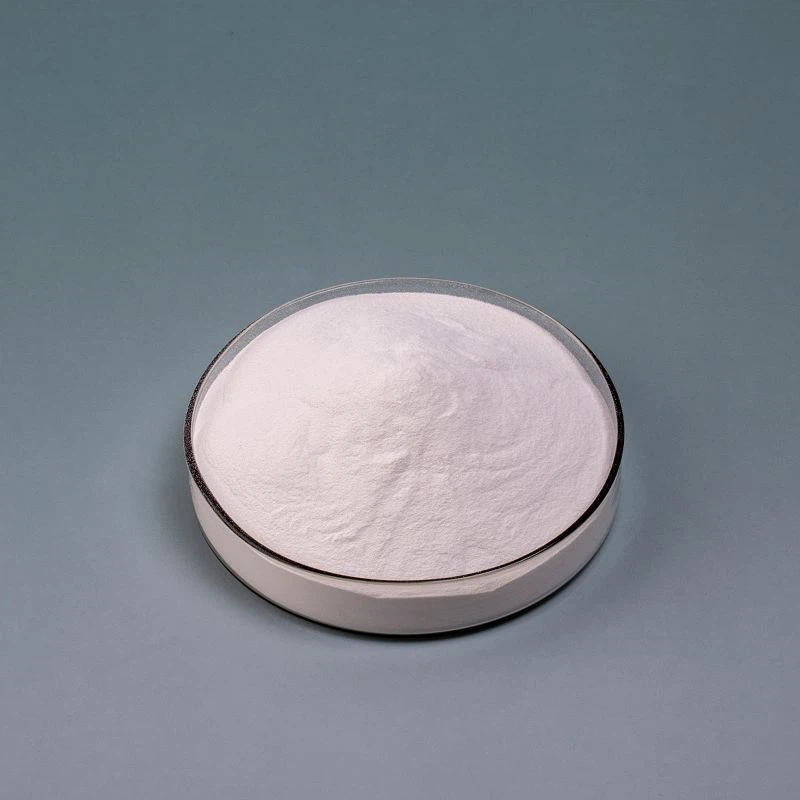
Dispersion stability refers to the ability of particles to remain uniformly distributed in a solution over time without agglomerating or settling. For Purity 98% Boron Nitride Powder, understanding its dispersion stability in a solution is crucial, as it directly impacts the performance and quality of various applications. As a supplier of Purity 98% Boron Nitride Powder, I am well - versed in the significance of this property and its implications for our customers.
Factors Affecting the Dispersion Stability of Purity 98% Boron Nitride Powder
Surface Chemistry
The surface chemistry of boron nitride powder plays a pivotal role in its dispersion stability. Our Purity 98% Boron Nitride Powder has a relatively inert surface, which can lead to poor dispersion in some solvents. However, modifications can be made to alter the surface properties. For example, functionalizing the surface with specific groups can improve its affinity with the solvent molecules. This allows for better wetting of the powder particles, reducing the likelihood of them coming together and forming aggregates.
Particle Size and Morphology
The particle size and morphology of the powder also greatly influence dispersion stability. Smaller particle sizes generally provide a larger surface - area - to - volume ratio, which can enhance the interaction between the powder and the solvent. Our high - purity boron nitride powder comes in various forms such as Flake Boron Nitride Powder. Flake - shaped particles have different dispersion characteristics compared to Spherical Boron Nitride Powder. Flakes may have a tendency to stack together, while spherical particles are more likely to disperse uniformly in some cases. Controlling the particle size distribution is also essential, as a wide distribution can lead to inconsistent dispersion.
Solvent Properties
The type of solvent used is a critical factor. Polar solvents can exhibit different interactions with boron nitride powder compared to non - polar solvents. A polar solvent may be able to solvate the powder particles more effectively if the surface of the powder has some degree of polarity or can be made to have polar groups. Additionally, the viscosity of the solvent affects the movement and settling of the powder particles. A higher - viscosity solvent can slow down the sedimentation process, improving the short - term dispersion stability.
pH of the Solution
The pH of the solution can have a significant impact on the dispersion of boron nitride powder. At certain pH values, the surface charge of the powder particles can change. This change in surface charge can either promote or prevent the aggregation of particles. For example, if the particles have a similar surface charge, they will repel each other, leading to better dispersion. Adjusting the pH to an optimal value can help maintain a stable dispersion of our Purity 98% Boron Nitride Powder.
Importance of Dispersion Stability in Applications
Thermal Conductivity Enhancement
One of the major applications of boron nitride powder is as a Boron Nitride Filler in thermal management materials. In order to effectively enhance the thermal conductivity of polymers or composites, the boron nitride powder needs to be well - dispersed. A stable dispersion ensures that there are continuous pathways for heat transfer through the powder particles. If the powder agglomerates, these pathways are disrupted, and the thermal conductivity of the material is significantly reduced.
Lubrication and Wear Resistance
In lubricant applications, the dispersion stability of boron nitride powder is vital. The powder acts as a solid lubricant, reducing friction and wear between moving parts. A stable dispersion allows the powder to form a uniform lubricating film on the surfaces. If the powder settles or aggregates, the lubricating performance will be compromised, and the parts may experience increased wear and friction.
Composite Manufacturing
When using our Purity 98% Boron Nitride Powder in composite materials, a well - dispersed powder results in better mechanical properties. The uniform distribution of the powder throughout the matrix material helps to transfer stress more efficiently. Agglomeration of the powder can create weak points in the composite, leading to a decrease in strength and durability.
Methods to Improve Dispersion Stability
Mechanical Methods
High - energy mixing methods such as ball - milling, ultrasonic agitation, and high - shear mixing can be employed to break up agglomerates and improve the dispersion of boron nitride powder in a solution. Ball - milling, for example, uses the impact and grinding action of balls to separate the powder particles. Ultrasonic agitation creates cavitation bubbles in the solution, which collapse and generate high - energy shockwaves that can break up aggregates.
Chemical Additives
The use of surfactants, dispersants, and stabilizers can significantly improve the dispersion stability. Surfactants can adsorb onto the surface of the powder particles, reducing the surface tension and preventing them from coming together. Dispersants work by creating a steric or electrostatic repulsion between the particles, maintaining their separation. Stabilizers can protect the particles from environmental factors that may cause aggregation.

Testing and Evaluation of Dispersion Stability
Visual Inspection
One of the simplest ways to assess dispersion stability is through visual inspection. A well - dispersed solution should appear homogeneous, without any visible aggregates or sedimentation. By observing the solution over a period of time, we can detect any signs of settling or flocculation.
Particle Size Analysis
Techniques such as dynamic light scattering (DLS) can be used to measure the particle size distribution in the solution. A stable dispersion will have a relatively consistent particle size distribution over time. If aggregation occurs, the measured particle size will increase, indicating a decrease in dispersion stability.
Sedimentation Rate Measurement
Measuring the sedimentation rate of the powder in the solution provides valuable information about its dispersion stability. A slower sedimentation rate indicates better dispersion. This can be done by observing the height of the sediment layer in a graduated cylinder over a specific period.
Conclusion
As a supplier of Purity 98% Boron Nitride Powder, we understand the critical role that dispersion stability plays in the performance of our product in various applications. By carefully considering the factors that affect dispersion stability, such as surface chemistry, particle size and morphology, solvent properties, and pH, we can provide our customers with guidance on how to achieve the best possible dispersion.
Whether you are in need of Flake Boron Nitride Powder for a specific application or are interested in using our Spherical Boron Nitride Powder as a Boron Nitride Filler, we are committed to ensuring that you receive a product with excellent dispersion characteristics. If you have any questions about our powder or need advice on improving dispersion stability in your solutions, don't hesitate to reach out. We're here to assist you in finding the best solutions for your business needs. Contact us today to start a discussion about your requirements and to explore the potential of our Purity 98% Boron Nitride Powder.
References
- Zhang, X., et al. "Dispersion and stability of boron nitride nanosheets in solvents". Journal of Colloid and Interface Science, vol. 456, 2015, pp. 211 - 217.
- Wang, Y., et al. "Influence of surface modification on the dispersion stability of boron nitride powder in aqueous solution". Materials Chemistry and Physics, vol. 186, 2017, pp. 106 - 112.
- Smith, J. K., et al. "Dispersion and thermal conductivity enhancement of boron nitride filled polymer composites". Composites Science and Technology, vol. 80, 2013, pp. 14 - 20.